

Serial founders Adewale Yusuf and Stanley Agu brought African founders, investors, engineers and creators to Greater Austin for a day built around AI, capital, careers and the creative economy, and a simple question: what are you building?
At Beyond Africa, the most common conference question was off the table.
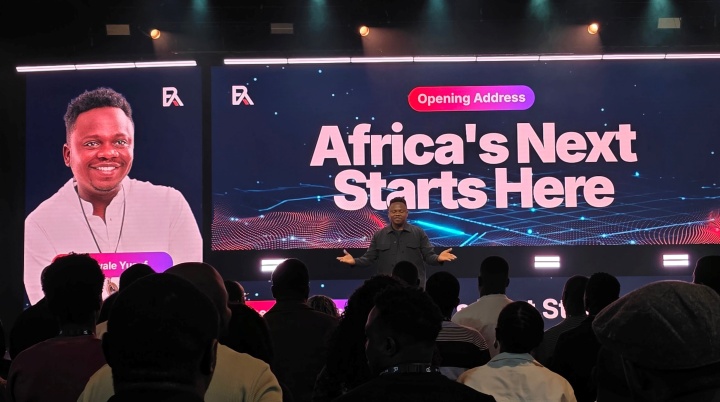
Standing on the main stage on Saturday, November 7, convener Adewale Yusuf asked the room to drop the usual icebreaker. Do not ask people what they do, he said. Ask them what they are building. “You can be building your life. You can be building your career,” he told the audience. Whatever it is, Beyond Africa exists to give it a room.

Convener and CEO, Beyond Africa
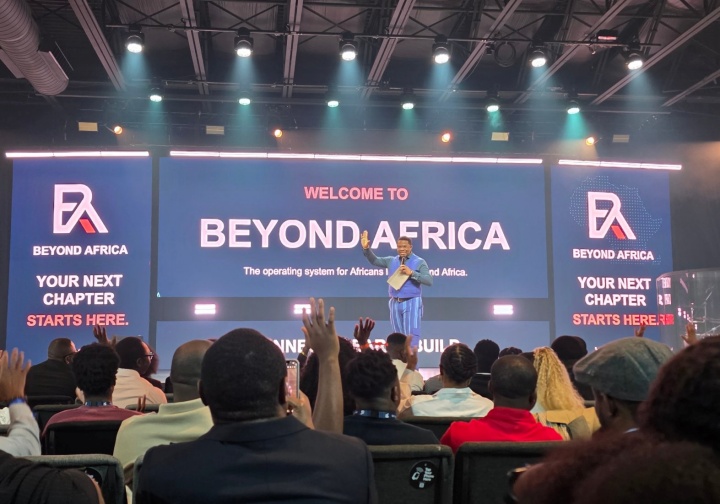
That idea ran through the entire day in Pflugerville, in the Greater Austin area, where Beyond Africa gathered African founders, investors, engineers, creators and corporate leaders for a full program of keynotes, panels, firesides and hands-on masterclasses. The lineup drew speakers from companies including OpenAI, Google, Microsoft, Visa, Amazon and Boston Consulting Group, and the sessions moved across five themes: artificial intelligence, fintech and wealth building, startups and venture capital, careers and immigration, and global business expansion.
The event calls itself “the operating system for Africans living beyond Africa.” For Trendy Africa Magazine readers, that phrase captures something familiar. Talent from the continent is everywhere now, leading teams, building companies and telling stories. What has often been missing is the infrastructure that connects it all. Beyond Africa is betting that the diaspora can build that infrastructure itself.
Two Serial Builders Behind the Room
Beyond Africa is the work of two founders who have spent their careers building things that connect African talent to opportunity.
Adewale Yusuf, the event’s convener and CEO, built his reputation on that mission. He founded Techpoint Africa, the technology media company and events platform, before going on to co-found TalentQL and AltSchool Africa, an education platform that trains Africans for careers in technology and business. Last month he stepped down as CEO of AltSchool Africa and moved to its board, telling Technext that he wanted to spend more time in the United States with his family. He also mentors founders through Techstars. Through Beyond Africa, he is applying the same instinct to a new audience: the millions of Africans building lives and careers outside the continent.
Co-founder and COO Stanley Agu brings a different kind of rigor. He holds a master’s degree in physics from the University of Bremen and spent years as a product designer and product manager at Kuehne+Nagel and Alocai before turning to entrepreneurship. He is the founder of Luftsocial and Anproba, and his focus is building scalable, AI-powered businesses that tackle complex problems. Together, the two pair an operator’s understanding of community with a product builder’s eye for systems.

Co-Founder and COO, Beyond Africa
More Than a Conference
In his opening address, Yusuf made clear that the conference is only one part of the plan. Beyond Africa is organized around six pillars: Media, Chapter, Capital, Academy, Network and Experience.
The media arm will tell the stories of Africans building around the world through podcasts and social content, because, as Yusuf put it, everything is about story and narrative. The chapter model began as a 12-week experiment in Austin. Every Tuesday, Africans from different countries gathered to work side by side and then spend an hour in open conversation about what each person was building. Members from Nigeria, Cameroon and other countries described finding community, connections and people who look like them. Yusuf said the room regularly included directors from companies such as Microsoft and Apple.
Now the chapters are expanding beyond Austin, with plans to reach more cities across the United States and, eventually, Canada and Europe. The network pillar is designed to go beyond tech, bringing doctors, lawyers and other professionals onto the same platform so members can find trusted expertise within their own community. The academy will focus on training, including helping members understand how to put AI to work in their own fields. Yusuf also shared the team’s ambition for next year: a three-day Beyond Africa gathering in Austin in late October 2027, designed for up to 7,500 attendees across three stages focused on capital, AI and robotics, and creativity. He was careful to describe it as a planning vision, and just as careful about who it is for. People assume the conference is only for tech and entrepreneurs, he said. It is for everyone. “This will continue to be a room for builders.”
The Power of the Room
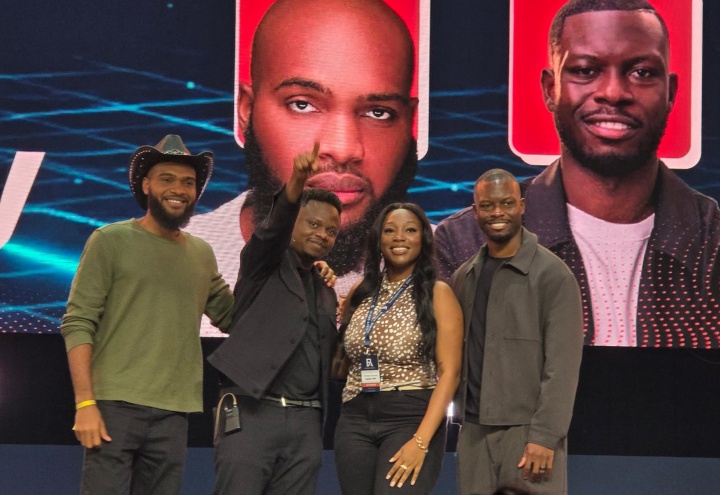
The morning set a high bar. Nmachi Jidenma, managing partner at Exanovo Capital, whose career includes General Catalyst, Sequoia and WhatsApp, delivered the opening keynote under a title that could have served as the event’s thesis: “The Power of the Room.” The first panel, “The Operator Advantage,” turned that idea toward the workplace, exploring how African professionals rise, lead and build influence inside global organizations. Moderated by N’nah Brieman, it brought together Akin Oyedele of Boston Consulting Group, Omolara Awoyemi of Amazon, Chidera Nwosu of Visa and Geoffrey Fonga of DataRobot.
The advice was refreshingly direct. Panelists urged the audience to look past mentors and find sponsors: senior leaders who see your work and will advocate for you in rooms you are not in. Omolara Awoyemi of Amazon described the biggest culture shock of arriving to work in the United States. “Nobody’s going to promote you if you don’t ask,” she said. You can do excellent work, she added, but you still have to say plainly that you want the next level.
Others pressed the point about presence. Be dependable. Arrive on time. Speak up in meetings, even if it is only to ask a question or summarize the next steps. In a world where AI can surface answers instantly, one panelist argued, the professionals who stand out will be the ones asking the right questions.
A Masterclass in Moving Up
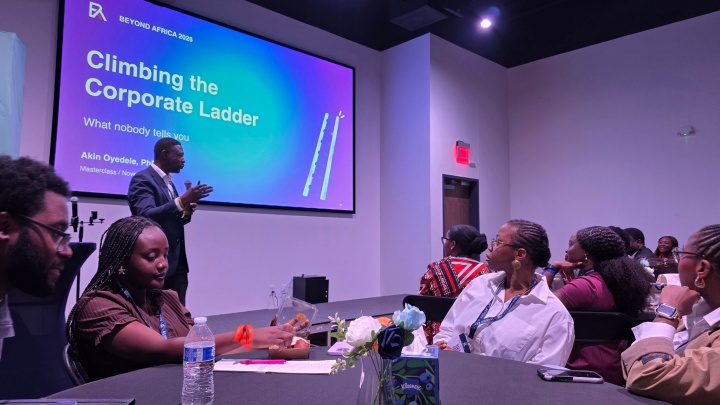
Oyedele, a partner at Boston Consulting Group who advises Fortune 500 and private equity-backed companies, expanded on those ideas in an afternoon masterclass titled “Climbing the Corporate Ladder: What Nobody Tells You.”
His framework rested on three ideas: sponsorship, ownership and positioning. Delivering great work matters, he said, but “excellence is just a first step.” Promotions are often decided in meetings you will never attend, which is why every professional needs someone willing to argue for them. He encouraged attendees to think of their careers the way a company thinks about governance, with a personal board of directors that includes advisers, mentors and coaches, and a sponsor as its chair.
On ownership, he named what he sees as one of the biggest setbacks for professionals from the continent: taking the back seat and waiting to be told what to do. His challenge to the room was simple. Do you know your company’s revenue? Do you know how your team’s work connects to it? If you are new in a role without clear goals, write your own job description. He also shared a tactic that one of his own team members credited for a recent promotion: sending your manager a short list of weekly priorities, covering what you achieved last week and what you plan to deliver this week.
Positioning, the final piece, is about reputation. Find your niche, build strength around it, and make your contribution visible. People talk about your work whether or not you are in the room, he reminded attendees, so it is worth deciding what you want them to say.
The Creative Economy, Unfiltered
In the afternoon, the conversation turned to the creative economy. Moderated by Christiana Okorocha, it featured Tobi Oluwole, the Nigerian Canadian entrepreneur, investor and CEO of Magnate Ventures, known for teaching business owners to grow through LinkedIn, and Tayo Aina, a content creator and co-founder of Bricks and Condo who has amassed more than a million followers through his inspiring YouTube storytelling about Africa.
Oluwole opened with a hard truth. He has run businesses since he was 15, he said, and for years none of them made money. What changed was his understanding of where most businesses actually fail. In his view, almost every idea can work. What founders miss is customer acquisition and distribution. Once he started posting on LinkedIn, the leads followed within the first month.
His own company began with a casual conversation in 2019, when he learned that someone had paid thousands of dollars for the kind of career coaching, he had been offering friends and family for free. Instead of building it first, he tested demand. He surveyed colleagues, posted on Instagram, ran a free workshop and invited attendees to pay upfront for a bootcamp that did not yet exist. Enough of them did that he registered the company and built the program, all while preparing for his wedding the following week.
The lessons he drew from it were practical. Never launch to crickets. Build a waitlist first, and validate an idea “through data or dollars” before spending your savings on it. Do not quit your job to prove your commitment. Make the move once the business is reliably earning your income. He described growing the company to seven figures in annual revenue through what he called tiny, steady steps, while keeping his team to fewer than five people.
For professionals who feel uneasy about content creation, he offered a formula. Monday through Friday, between 9 a.m. and noon, publish one LinkedIn post of eight to twelve lines, double spaced, with a photo from your camera roll, and mention your business twice a week. Do it for 100 days. “Even if you don’t like social, you like money,” he said.
Aina’s story was about patience. He began making videos out of curiosity, documenting places and businesses that few people were filming properly, and he did not earn his first dollar from YouTube until years after he started. His audience grew as his focus widened, from Lagos to Nigeria to the wider continent, and as he shifted toward universal stories that anyone, anywhere, would want to watch.
His advice to creators was to start with the end in mind. Years of real estate videos gave him a built-in audience when he moved into real estate, and the same logic applies to his travel content. Still, he was candid that African creators are not yet capturing the value their culture generates. Too much of it, he argued, flows to owners outside the continent, and changing that will require infrastructure built jointly by Africans at home and in the diaspora.
Both speakers agreed that AI is changing how they work without replacing what makes the work valuable. AI makes creating faster, Aina said, comparing it to getting a car instead of walking. “It doesn’t replace the creativity,” he said. Oluwole framed it the same way: AI enhances creativity and accelerates execution so builders can spend more time creating.
Building What Comes Next
By the end of the day, the common thread was hard to miss. Whether the subject was a corporate promotion, a YouTube channel or a business started from a single Instagram story, every speaker returned to the same instruction: identify the problem, take ownership of it, and build.
Beyond Africa is attempting to do exactly that for the diaspora itself. The problem it has identified is fragmentation: talented Africans spread across cities and industries, often without the network, capital or stories that would let them rise together. Its answer is a room, and then a weekly chapter, a media platform, a professional network and an academy built around that room.
Yusuf’s request at the start of the day still stands as the best summary of what Beyond Africa is trying to create. Do not ask people what they do. Ask them what they are building. In Pflugerville, the answers filled a room.
About Beyond Africa
Beyond Africa connects African talent, capital and opportunity worldwide through six pillars: Media, Chapter, Capital, Academy, Network and Experience. Learn more at beyondafrica.org.
By Jennifer Onwumere for Trendy Africa Magazine
