
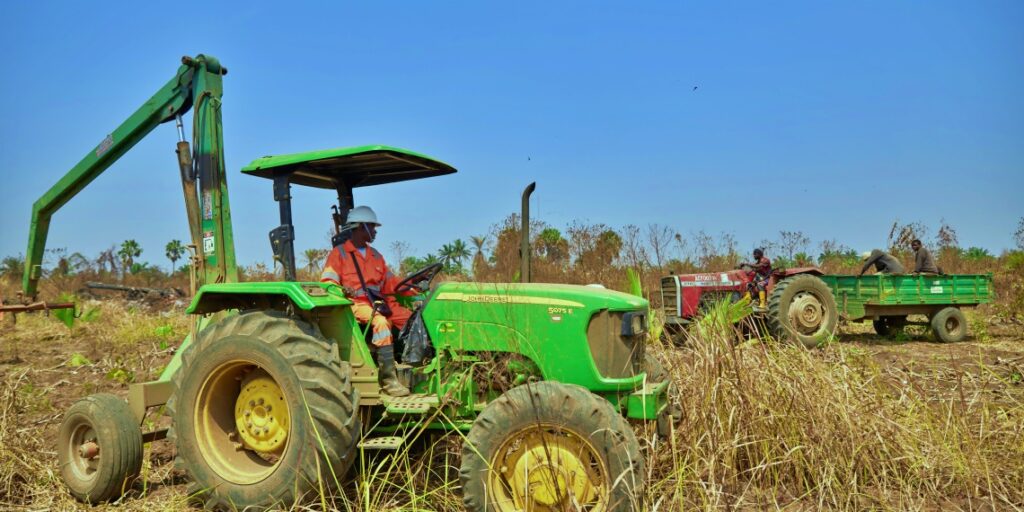
Nigeria’s position as the world’s largest cassava producer presents an unprecedented opportunity to build a globally competitive agro-industrial economy but unlocking that potential requires a decisive shift from production to value-added industrialisation.
This was the central message as Agbeyewa Farms and Matna Foods marked World Cassava Day 2026, calling for greater investment across Nigeria’s cassava value chain to transform abundant agricultural production into sustainable industrial growth.
Managing Director and Chief Executive Officer of Agbeyewa Farms and Matna Foods, Seyi OSKA Aiyeleso, said Nigeria has already demonstrated its ability to produce cassava at scale. The next challenge, he explained, is expanding processing capacity, strengthening manufacturing linkages, and creating higher-value industrial products that can drive economic diversification.

“Nigeria does not have a cassava production problem. The opportunity before us is to convert our production advantage into industrial advantage,” Aiyeleso said.
According to him, countries that have successfully transformed their agricultural sectors including Thailand achieved lasting economic growth not simply by increasing production but by investing in processing, innovation, export development and industrial applications.
He noted that while cassava remains essential for food security and rural livelihoods, only a fraction of Nigeria’s annual harvest is converted into high-value industrial products such as starches, sweeteners, ethanol, pharmaceutical ingredients, adhesives and other manufacturing inputs.
“Our focus is building stronger connections between farms, factories and markets because sustainable growth occurs when the entire value chain functions as one integrated system,” he added.
The company’s integrated approach reflects the long-term vision of Cavista Holdings, whose investments in Agbeyewa Farms and Matna Foods are designed to strengthen feedstock supply, modern processing capacity and market development simultaneously.
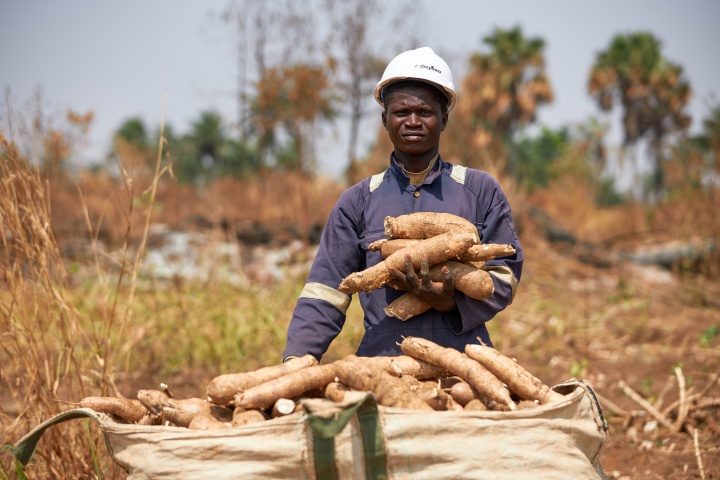
According to Aiyeleso, industrialisation requires more than farming. It depends on reliable raw material supply, efficient logistics, quality systems, technology, financing and coordinated partnerships across the public and private sectors.
He observed that while farmer interest and cassava production continue to grow, industrial demand has not expanded at the same pace, creating a significant opportunity to increase local processing capacity and reduce dependence on imported industrial derivatives.
Beyond agriculture, he said, a stronger cassava industry stimulates growth across logistics, engineering, warehousing, packaging, financial services, research and manufacturing, while supporting import substitution and creating thousands of skilled jobs.
Looking ahead, Agbeyewa Farms and Matna Foods reaffirmed their commitment to building scalable, technology-driven solutions that position cassava as a strategic industrial resource capable of strengthening Nigeria’s manufacturing competitiveness and long-term economic resilience.
As Nigeria pursues economic diversification, the company believes the country’s cassava success should no longer be measured solely by production volumes, but by the value created through innovation, processing and industrial development.
source: Cavista media
